

OEM vs. Aftermarket Mazda Parts: Which Should You Buy?
Short answer: Buy Genuine Mazda for anything that has to seal, stop the car, talk to a sensor, or line up with a body panel: filters, brakes, cooling, lighting, sheet metal. Those parts are built to the tolerances the car was designed around, they carry a real warranty (12 months/12,000 miles when a dealer installs them, and a lifetime limited warranty on Mazda brake pads and shoes), and when you buy them online from a dealer they usually land within a few dollars of a mid-tier aftermarket part. Aftermarket earns its keep in two places: consumables on a high-mileage Mazda you are not planning to keep, and performance or styling parts Mazda never made in the first place.
Written by the parts team at Seacoast Mazda, 180 Spaulding Tpke, Portsmouth, NH. Updated July 2026.
We get this question on the phone almost every day, usually some version of “I found the same part on a marketplace site for thirty bucks less — is yours actually different?” It is a fair question, and the honest answer is: sometimes yes, dramatically, and sometimes barely at all. The trick is knowing which parts fall into which bucket.
So here is the version we would give a friend, with real part numbers and real prices off our own shelves, not a sales pitch.

What does “OEM” actually mean on a Mazda?
The term gets thrown around loosely, and that vagueness is where people get burned. There are really four tiers:
- Genuine Mazda Parts. Boxed and labeled by Mazda, sold through Mazda dealers, carrying a Mazda part number like KD45-61-J6X. This is the part the factory would have bolted on.
- OEM / OES. Made by the same supplier that produced the original, but sold in that supplier’s own box without the Mazda label or the Mazda warranty. Often genuinely fine. Often not the same revision, because suppliers update their catalog parts on their own schedule, and Mazda’s updates do not always follow.
- Aftermarket, branded. A reputable independent manufacturer building to their own interpretation of the spec. Quality ranges from excellent to indifferent depending on the category.
- White box. Unbranded, no traceability, no engineering data behind it. This is where the thirty-dollar savings usually comes from, and it is the one we would steer you away from every time.
When someone tells you a listing is “OEM,” ask which of those four they mean. If they cannot answer, that is your answer.
The real difference is not quality — it is tolerance
Most aftermarket manufacturers can make a part that is strong enough. What they struggle with is making a part that is exactly the same. And on a modern Mazda, exactly the same matters more than it used to.
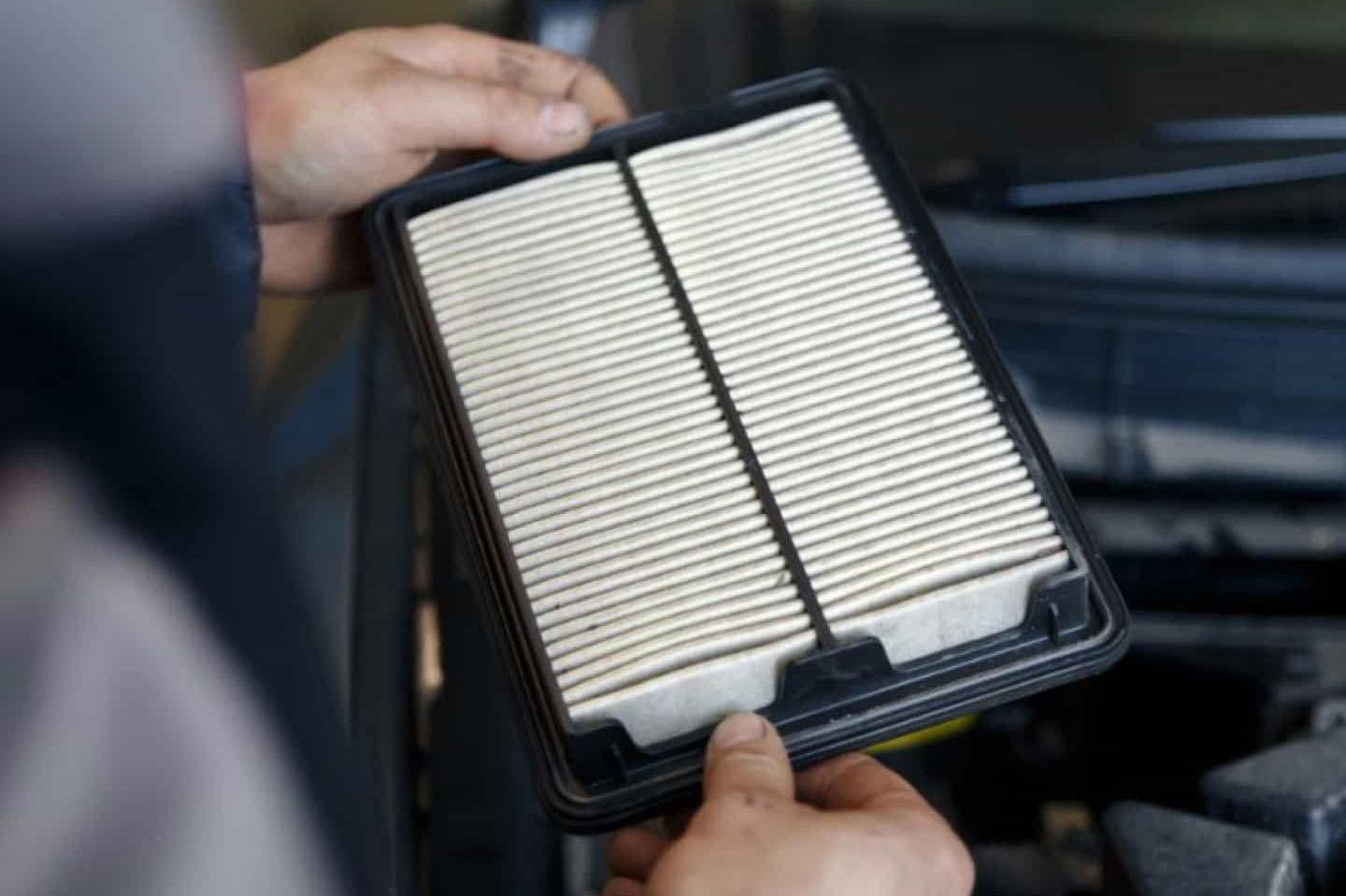
Take a cabin air filter. Any pleated filter will trap dust. But the housing on a CX-5 is a shallow plastic tray with a specific gasket lip, and if the filter frame is two millimeters short, unfiltered air simply routes around it. The filter looks installed. It measures fine. It just is not doing its job, and you will never know unless the blower starts whistling.
Or take brake pads. Mazda spends a lot of engineering hours on pedal feel and on noise, vibration and harshness. The reason a CX-5 stops the way it does is a specific friction compound paired to a specific rotor metallurgy. Swap in a generic semi-metallic pad and the car still stops. It also squeals cold, dusts your wheels grey, and eats the rotor faster than the pad. We see those cars come back through the service lane, and the customer has usually paid twice by then.
The categories where tolerance bites hardest, in our experience: cabin and engine air filters, brake friction, thermostats and coolant housings, wheel bearings and hubs, ignition coils, oxygen and mass-airflow sensors, and anything body or lighting related where a two-millimeter gap is visible from ten feet away.
Is Genuine Mazda really more expensive?
This is the assumption we most enjoy breaking, because it is built on dealership counter pricing — the MSRP you would pay walking into a service department. Online, dealers price against each other, not against the sticker. Here is what four common Genuine Mazda parts cost on this site right now versus Mazda MSRP:
| Genuine Mazda part | Part number | Mazda MSRP | Our price | You save |
|---|---|---|---|---|
| Cabin air filter, Mazda3 / Mazda6 / CX-5 | KD45-61-J6X-9U | $36.05 | $25.74 | 28.6% |
| Front brake pads, 2013–2020 CX-5 | K0Y1-33-28ZB | $130.83 | $91.43 | 30.1% |
| Front brake pad set, 2021–2024 CX-5 | KGY0-33-28Z | $186.45 | $128.62 | 31% |
| Oil filter, Skyactiv-G | PY8W-14-302A-MV | $11.27 | $9.46 | 16.1% |
Prices verified July 2026. Check the live listing for current pricing, since we adjust with Mazda’s price files.
A 30% discount on a genuine brake pad set closes most of the gap to a mid-tier aftermarket set, and the genuine set comes with a warranty the aftermarket set does not. That is the whole argument in one line. If you are buying in volume for a shop or a fleet, the gap closes further; see our wholesale pricing on OEM Mazda parts page.
When is aftermarket the smarter buy?
We are a Mazda dealer, so you would expect us to say never. We do not say never.
Aftermarket makes real sense when the car is old enough that you are managing cost rather than preserving value — a 2009 Mazda3 with 190,000 miles that needs a sway bar link does not need a genuine sway bar link. It makes sense for wear items where the engineering is genuinely simple: wiper arms, hardware, clamps, bulbs in non-projector housings. And it makes sense for anything Mazda does not build, which is most of the aftermarket wheel, suspension and intake world. If you want coilovers for an MX-5, Mazda is not going to sell you coilovers.
Where we would push back hard: any part on a leased vehicle, any part on a car still inside its factory warranty, anything in the brake or airbag or cooling system, and anything painted or body-related. On those, the money you save is smaller than the money you risk.
What does the Genuine Mazda parts warranty actually cover?
This is the part people underestimate, so specifics matter:
- Replacement parts and accessories installed by a Mazda dealer (1996 and newer vehicles) are covered for 12 months or 12,000 miles, whichever comes first, from the installation date. Labor for the replacement is covered too, though you do need the dealer repair order showing the install.
- Genuine Mazda and Value Products by Mazda brake pads and shoes carry a lifetime limited warranty for as long as the original purchaser owns the vehicle they were installed on, provided an authorized Mazda dealer did the install. Worn out, damaged or defective pads get exchanged for new; you cover the installation labor on the replacement.
- Genuine Mazda Accessories installed by the dealer at or before initial retail delivery inherit the vehicle’s new-vehicle limited warranty.
Plenty of aftermarket brands advertise lifetime pad warranties too, so that alone is not unique. What is different here is who honors it: the claim goes through a Mazda dealer against a Mazda part number with your original repair order as proof, rather than a retail counter matching you to whatever compound is on the shelf that afternoon. Full details are on our Mazda parts and accessories warranty page.

Does using aftermarket parts void my Mazda warranty?
No — and anyone who tells you otherwise is bending the truth. Under the Magnuson-Moss Warranty Act, a manufacturer cannot void your vehicle warranty simply because you used an aftermarket part or had service done outside the dealer network. What Mazda can do is decline a claim for damage that a specific aftermarket part caused. If a cheap aftermarket thermostat sticks closed and cooks the head gasket, that repair is on you.
The practical takeaway: keep receipts, and be conservative with parts that can take something expensive with them when they fail.
How do I make sure I order the right Mazda part the first time?
Order by VIN, not by year and model. Mazda changes part numbers mid-year more often than people expect. The 2013–2020 CX-5 front pad above is a different number from the 2021–2024 set, and there are trim-level splits inside those ranges too. Our Mazda VIN decoder will tell you exactly what your car left the factory as.
If you are still unsure, call us before you order. Returns are possible within 30 days on uninstalled, resaleable parts in original Mazda packaging, but there is a 20% restocking fee, so a two-minute phone call is cheaper than a return. The full terms are on our returns policy.
Frequently asked questions
Are Genuine Mazda parts and OEM Mazda parts the same thing?
Not always. Genuine Mazda parts come in Mazda packaging with a Mazda part number and the Mazda warranty. “OEM” is often used to describe a part made by Mazda’s original supplier but sold in the supplier’s own box without Mazda’s labeling, warranty, or revision tracking. On this site, everything is Genuine Mazda.
Why are dealer parts cheaper online than at the parts counter?
Counter pricing follows Mazda MSRP because it is bundled with a service visit. Online, dealers compete directly with each other, so we discount off MSRP, typically up to 33%. The part in the box is identical.
Which Mazda parts should I never buy aftermarket?
Brake friction and rotors, cabin and engine air filters, thermostats and coolant components, wheel bearings and hubs, ignition coils, oxygen and mass-airflow sensors, airbag and seatbelt components, headlights and tail lights, and any body panel or painted part. Fitment and calibration tolerances on those are tight enough that “close” causes real problems.
Do Genuine Mazda brake pads really have a lifetime warranty?
Yes. Genuine Mazda and Value Products by Mazda brake pads and shoes carry a lifetime limited warranty for as long as the original purchaser owns the vehicle, as long as an authorized Mazda dealer performed the installation. You present the service repair order and return the original components; you pay only the installation labor on the replacement.
Will aftermarket parts hurt my Mazda’s resale or trade-in value?
On a newer car, yes, noticeably — especially visible parts. Appraisers spot non-Mazda body panels, mismatched paint, non-original lighting and aftermarket wheels immediately, and it moves the number. On a ten-year-old commuter, nobody cares.
Can I install Genuine Mazda parts myself and keep the warranty?
You keep the part warranty against defects, but the 12-month/12,000-mile coverage with labor and the lifetime brake pad coverage both require installation by an authorized Mazda dealer. If the warranty coverage matters to you on a given repair, have the dealer do it.
Not sure which way to go on a specific part? Ask us.
We will look it up by VIN and tell you honestly whether Genuine Mazda is worth it for that job. Call 603-436-6811, email [email protected], or use our contact page. MazdaPartDirect.com is owned and operated by Seacoast Mazda, an Authorized Mazda Dealer at 180 Spaulding Tpke, Portsmouth, NH 03801.
Related reading: Mazda CX-5 brake pad part numbers · engine air filter vs. cabin air filter · OEM Mazda CX-5 oil filter · how often to change spark plugs · current promo codes